
The Wine Industry Is Overwhelmingly White. This Black Winemaker Wants to Change That
by Bria Overs
Winemaking is one of the oldest crafts in human history, with evidence from historians and archeologists going back as far as 6,000 B.C.
In the United States, Black folks didn’t enter the industry until the late 1800s. With 15 years in the business, Longevity Wines is one of less than a hundred Black-owned wineries in an overwhelmingly white industry.
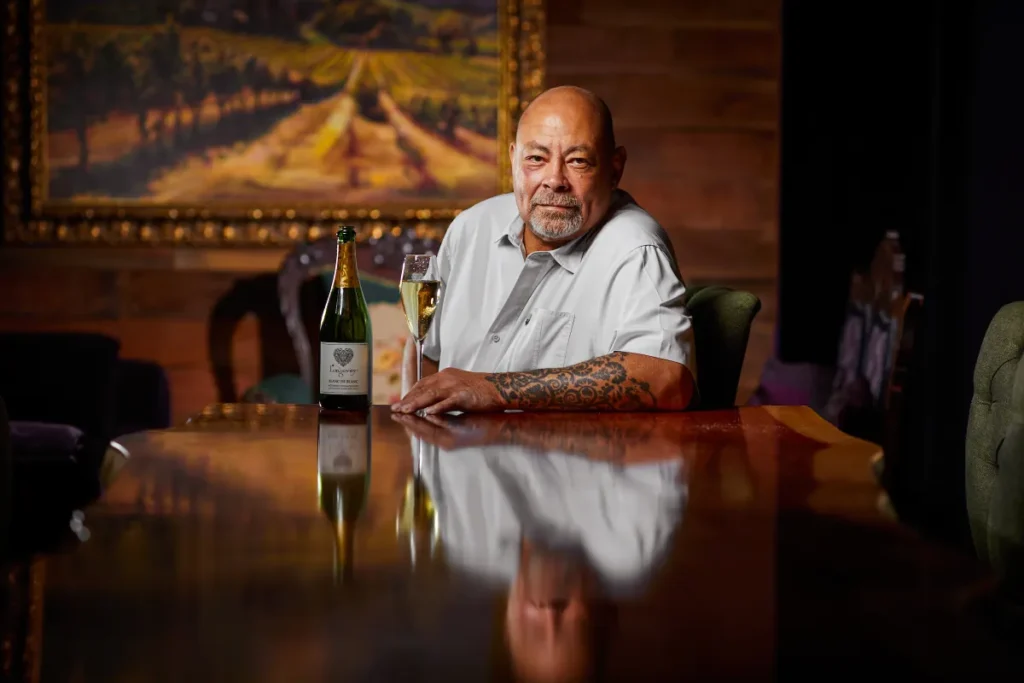
When asked about the challenges of starting a winemaking business, Winemaker Phil Long, who co-founded Longevity Wines, and is president of the Association of African American Vintners, says the biggest challenge was getting a foot in the door.
“We are such a small percentage of the entire landscape of what this industry is,” he tells Word In Black. “You’re starting out as a new generation of wine that’s never been there before. The people have never heard of you, your name, your background. The wine business is extremely challenging.”
As of January 2023, there are over 11,500 wineries in the United States. However, pinpointing the number of Black-owned wines is difficult, and Long estimates less than 1% are Black-owned.
The industry’s history and legacy is extensive, and Black folks have long been barred from participating.
Wine came to the Americas in the pockets of the Europeans that immigrated here. For Black folks entering the industry now, Long says the difference is “we didn’t even have pockets.”
“I decided there are other ways to get into the wine industry besides land ownership, and it’s made us successful, but it’s not necessarily going to make everyone successful.”PHIL LONG, WINEMAKER AND CO-FOUNDER OF LONGEVITY WINES
Phil and his late wife Debra Long started Longevity Wines in 2008, based in Livermore Valley, California. What began as a fun hobby in their garage is now a family-owned, award-winning business with over a dozen wine options, including Sauvignon Blanc, Pinot Blanc, and Chardonnay.
Their first wine was a 30-gallon barrel of Syrah, a rich red wine they stored in their garage. After running out of space, the duo knew it was time to move upward and onward.
When they were ready to launch, they had about 12 of those 30-gallon barrels in what became a custom-built, climate-controlled barrel room.
“At that point, they were just homemade wines we could drink and share with friends, but we can’t sell” because of laws around the sale of homemade wine, Long says. “In order to keep following that passion of creating wine, the only way we were going to do it is to sell it. So we jumped in.”
Even after starting Longevity Wines, Debra and Phil continued with their full-time jobs.
Debra was the Office Manager for the Danville Chamber of Commerce and became interim President and CEO in 2011. Phil was the Creative Director for a point-of-purchase display firm in Northern California.
Eight years into their business venture, Debra was diagnosed with pancreatic cancer and passed away in 2019.
Longevity Wines’ branding, both on the bottles and in their wine-tasting room, is heavily inspired by Phil and Debra’s life together and the legacy they built. Today, Long runs his business with his son, Phil Long Jr., annually producing about 3,500 cases made with local grapes.
Diversifying the Wine Industry
Long has been president of AAAV for the last three years. His focus is generating more awareness for Black-owned wineries and winemakers.
The big question Long seeks answers to is, “How do we get to the point where the people who are making the wine look like the people who are drinking the wine?”
He knows from first-hand experience the barriers to entry in the wine industry, and it’s his mission to create more opportunities for young Black folks and other minorities. Long projects that with each new winery, the overall percentage of minority-owned wines will shrink.

As a young man, Long didn’t know much about the wine industry. And he’s not alone.
“So if I don’t know, how many people don’t really know this is an opportunity for them,” he says. “That’s why we work so hard to reach the younger generation and try to provide them with the means to learn about it.”
Being educated and doing “homework,” as he calls it, is another piece of the puzzle of starting and growing a wine business.
“They see the pot of gold, but they don’t see the work to get to the pot of gold,” Long says. “So first and foremost, do your homework and educate yourself above everything.”
AAAV provides scholarships for Sonoma State University students and Wine & Spirit Education Trust students at Napa Valley Wine Academy.
“We’ve got to grow that number, and the bottom line is we have to start educating the younger population that is going to come up and replace us,” Long told Word In Black.
That applies to his business as well.
He’s working to create a generational business for his family to continue, Long says. “Creating a brand that’s timeless is absolutely huge.”
Growing Longevity Wines
In grocery stores nationwide, hundreds, if not thousands, of wines line aisles and shelves. This is another challenge of the winemaking business — standing out on those crowded shelves.
“Making wine is the easy part,” Long says. “Selling wine is the hard part.”
Long and Longevity Wines partnered with Bronco Wine Company in 2019. This helped him scale the business nationwide and sell his products in supermarkets, restaurants, bars, and more.
Bronco Wine Company is another family-owned wine business founded by the Franzia Family in 1973. Their portfolio of wine companies has 125 businesses, including Longevity Wines.
Through the partnership, Longevity Wines produces about 50,000 cases each year.
Although the partnership has helped, there’s more to running a successful business. He doesn’t believe in the common saying, “If you build, they will come.” That relies on chance instead of hard work.
His perspective is to convince stores to want to make space for new products on their shelves. Having a solid marketing strategy helps with this.
“There’s a lot of great winemakers out there that just don’t have the marketing savvy or the brand savvy to make it work. Once you have those pieces in place, and you have those tools in your tool bag, you can carry them into any state.”
About Author