
Countdown: New book details how engineer Neely overcame adversity, excelled at NASA

by: Bernard S
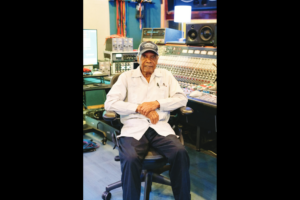
The name “C. Garfield Neely” sits among those who shaped NASA’s storied mission to explore the cosmos. For more than four decades, the Rockledge resident has seen the tragedies and triumphs of the nation’s space agency.
He has also had a role in structural engineering analysis for some of the iconic structures where thousands worked at the Kennedy Space Center.
“True genius is the ability to look at a problem and make it simple, sometimes by asking yourself, ‘does it hold water? Is it a valid concept? Does it comply with the laws of science and the principles of mathematics?’” said Neely, who recently released his autobiographical book Countdown: From the Science Table to the Launch Pads.
Neely provided engineering support for the modification of platforms at the Vehicle Assembly Building – one of the world’s largest buildings by volume. It was in this building that the massive Saturn V rockets used during the Apollo missions were erected. The engineer also helped analyze and modify launch pads A and B, the crawler transporter, mobile launch platforms, parts of the space shuttle, and even Space Launch System platforms that are part of the Artemis program to return to the moon.
To the stars
Neely retired in 2019 after a 43-year career at the space agency – the world’s leading gateway to the stars.
But, Neely’s determination and drive didn’t just appear out of thin air. An upbringing in the deep South where Neely was molded by not only his parents, but also his village, helped him launch his own path as the nation struggled to defy the Jim Crow era of segregation.
Growing up in the bustling, historic college town of Athens, Georgia, a young Charlie Neely Jr. became involved in church. For Neely, church served as a community hub where people sang, preached and talked about the Bible. The community would also receive updates on the Civil Rights Movement.
“Church allowed me to be part of something bigger than myself,” said Neely, who sang in the choir and volunteered as a junior deacon at Friendship Baptist Church in the northern Georgia town where the University of Georgia is based. “People were genuinely glad to see you. Neighbors and friends went to church with me. Church was the glue that held us together.”
Those early experiences for Neely, along with following the guidance from his parents, taught him life skills such as discipline, confidence and responsibility. Neely said the wisdom gained led him to being a productive leader in the community.
Neely’s father, Charlie Garfield Neely Sr., was a licensed automobile painter for a dealership, owned a car painting shop and was also a deacon at the church. Neely’s mother, Evelyn Corene Neely, a licensed business owner whose beauty parlour was run out of her home, was a deaconess.
“My parents taught me that you can be anything you want to be if you put your mind to it,” Neely said. “My parents were well-respected. It was expected for us to behave (in school). I did what my parents wanted me to do and everything fell in my lap. I raised my kids the same way.”
Neely said his mother was the main spokesperson for the school’s Parent Teacher Association. His father was a bookkeeper and secretary for a number of organizations, including the church.
“My parents taught me to care about people other than myself,” Neely said.
While attending Lyon Junior High School, Neely joined the band and played the drums, which he said taught him discipline and hard work, skills he would carry into his career at NASA. The engineer said the band practiced relentlessly on halftime show performances until they got it right.
“If a problem appears hard initially, it can be broken up into pieces,” Neely said. “If you work hard at something, you will excel in it. If you prepare and stick to it, it will pay off.”
During his elementary school days, Neely also developed a passion for drawing, math and science, which led him to engineering. He was inspired by the science table while in first grade. Neely also wanted to be a businessman, carry a briefcase and be someone who made lots of money.
“I had an imagination. I thought it was cool to see someone scribble something down on a piece of paper and create it…like structures that have never been built,” Neely said.
Neely, a 1976 Savannah State College (now university) graduate, was recruited straight out of college to work as a NASA contractor. As the space center continued efforts to employ a diverse, qualified workforce, Neely began working for the Planning and Research Corporation. The design contractor was hired as a NASA contractor to support the transition from the Apollo program that landed man on the moon to the Space Shuttle era.
Neely said his department only had two Black employees, including him. In 2012, Black people made up 11.8 percent of NASA’s workforce, which slightly dipped to 10.9 percent in 2021, the latest year the statistics were made available, according to the NASA Office of Inspector General.
The veteran engineer said mentorship, the right preparation and understanding the system helped him overcome Imposter Syndrome, a psychological phenomenon where a person feels they don’t belong in a social or professional setting.
“In my role as a design engineer, we had to mail out our engineering prior to the design review meetings. Anybody at the table could ask you a question,” Neely said. “They initially assigned me to small parts like handrails. Toward the end of my career, our customers started asking for me by name to work on projects. I trusted the system. It brought me here.”
Neely had high achievements while working at NASA, leading him to win a number of awards, including for his work on the Vehicle Assembly Building platform analysis. During Neely’s tenure at NASA, the space agency flew at least 135 space shuttle missions.
Recalling tragedies and triumphs
One of Neely’s most memorable moments while working at NASA was when he found out about the deadly Space Shuttle Challenger explosion that occurred 73 seconds into the flight. The Challenger disaster – which led to the deaths of seven astronauts, including teacher Christa McAuliffe – happened on the morning of Jan. 28, 1986.
Neely was on a temporary assignment in Vandenberg, California and driving to work when he heard a radio broadcast that announced the tragedy.
“At the office, about 60-to-70 of us crowded around a little 10-inch television,” Neely said. “We watched the video of the accident over and over, looking for clues to see if we could rationalize this catastrophe.”
Still, Neely stayed focused, embracing criticism and becoming an expert in structural steel and aluminum design and analysis. At NASA, Neely was known as one of the ‘Space Shuttle Legends,’ since he worked from the first shuttle launch to the last.
Neely said Black representation in the aerospace industry – which continues to grow with missions to return to the moon and journey to Mars – remains important.
“Black people are creative. We have skills that are untapped. Every time we get an opportunity to perform, we excel to the next level. We’ve had so many inventions over the years,” Neely said. “When you bring a Black man to the table, they expect a Black man to not know what he’s doing. Representation lets the world see that we are all the same. Diversity is our strength.”
Neely said he gets excited when thinking about the next generation of spaceflight, especially with more than 100 flights launched this year from the Kennedy Space Center. Neely said there will be many spinoff (inventions) from the space industry assignments.
“Historically, when engineers had to solve extreme (problems), many every day spinoffs were born, including CAT scans, MRIs, the GPS, super computers, fax machines, cordless power tools and growing crystals,” Neely said. “Who would have thought that a rocket can blast off and land upright? I am a witness of learning more from doing something wrong than right or correct.”
More space missions means more technological advancement for humankind, according to Neely.
“There will be no progress without change,” Neely said.
Throughout the years, Neely has volunteered for a variety of community organizations, offering his expertise. The engineer has served as a science fair judge at Golf View Elementary School in Rockledge, taught as a drum instructor at Altamonte Springs, and volunteered on the executive board of the Save Our Neighborhood Initiative, a nonprofit focused on improving and protecting local communities.
Neely said giving back is good for the soul.
“Giving back allows you to bless other people. You feel good when you give something back,” said Neely, who is a life member of Kappa Alpha Psi Fraternity, Inc. “Giving back is God-like. If you give something back, stuff will come back to you, multiplied.”
Neely has been married to his wife, Geneva Poston, since 1988. The couple has two children and one grandchild.
Neely’s advice to the next generation, regardless of their profession, is to: take pride in your work, be prepared, expect criticism but don’t fear it, find your seat at the table, give back, stay resilient and have faith.
“As NASA says before every great mission: Godspeed,” Neely said in his book. “Godspeed to the next generation. May you dream boldly, work tirelessly, and continue to reach for the stars.”
About Author