
Americans fault news media for dividing nation: AP-NORC poll
by DAVID KLEPPER Associated Press
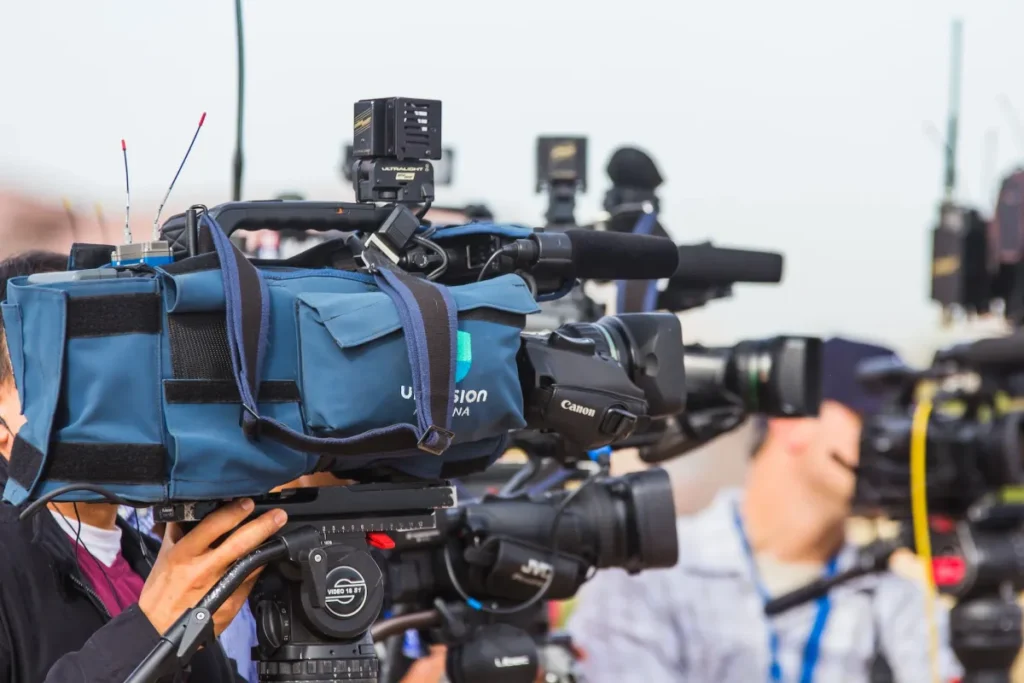
When it comes to the news media and the impact it’s having on democracy and political polarization in the United States, Americans are likelier to say it’s doing more harm than good.
Nearly three-quarters of U.S. adults say the news media is increasing political polarization in this country, and just under half say they have little to no trust in the media’s ability to report the news fairly and accurately, according to a new survey from The Associated Press-NORC Center for Public Affairs Research and Robert F. Kennedy Human Rights.
The poll, released before World Press Freedom Day on Wednesday, shows Americans have significant concerns about misinformation — and the role played by the media itself along with politicians and social media companies in spreading it — but that many are also concerned about growing threats to journalists’ safety.
“The news riles people up,” said 53-year-old Barbara Jordan, a Democrat from Hutchinson, Kansas. Jordan said she now does her own online research instead of going by what she sees on the TV news. “You’re better off Googling something and learning about it. I trust the internet more than I do the TV.”
That breakdown in trust may prompt many Americans to reject the mainstream news media, often in favor of social media and unreliable websites that spread misleading claims and that can become partisan echo chambers, leading to further polarization.
While a slim majority of Americans say they have some degree of confidence in the news media’s ability to report the news fully and fairly, only 16% say they are very confident. Forty-five percent say they have little to no confidence at all.
The survey reveals the complicated relationship many Americans have with the media: A majority rate in-depth and investigative reporting as very helpful or extremely helpful for understanding the issues they care about, but they are more likely to say they regularly scan the headlines than read an in-depth investigative article. And while overall trust in the media is low, a majority of respondents say the media is doing at least somewhat well in covering issues they care about.
Four in 10 say the press is doing more to hurt American democracy, while only about 2 in 10 say the press is doing more to protect it. An additional 4 in 10 say neither applies.
Partisancable news outlets and social media platforms have driven the problem by conditioning many Americans to see one another as enemies, said Joe Salegna, a Republican who lives on Long Island, New York.
“I think it’s tearing this country apart,” Salegna, 50, told the AP. “Since the 2016 election I think it’s gotten a lot worse.”
Republicans view the news media less favorably than Democrats, with 61% of Republicans saying the news media is hurting democracy, compared with 23% of Democrats and 36% of independents who don’t lean toward either party. Majorities across party lines say the news media fuels political division, but Republicans are much more likely than Democrats to say that’s happening a lot.
And more Republicans think the news is strongly influenced by the U.S. government and the political views of journalists.
Coverage of recent presidential elections, the coronavirus pandemic, protests against police killings of Black Americans and other events convinced Janis Fort that the media can’t be believed. One station will cover a story that others ignore, she said, leaving viewers not sure whom to trust.
“Everyone tells a different story. The media does nothing but stir up fear,” said Fort, a retired 71-year-old Republican who lives in Navarre, Florida. “For me, and for most of the people I know, we feel like we’re totally in the dark.”
Research has shown that fragmentation of the media ecosystem, driven largely by the internet, has contributed to polarization. Experts say America’s heightened political divisions have a number of causes — gerrymandering that reduces political competition, for example, or politicians who stoke fear and distrust — but media fragmentation and misinformation are making a clear impact, too.
“We should be concerned for the health of democracy,” said Joshua Tucker, a political scientist at New York University who studies partisanship and co-directs NYU’s Center for Social Media.
Concern about the threat posed by misinformation unites Americans of both parties, with about 9 in 10 U.S. adults saying misinformation is a problem. A third of American adults say they see stories with false claims from politicians or misleading headlines every day.
“There still is good journalism, it’s just the internet has made it so that anybody can be a quote-unquote journalist,” said Chris Nettell, of Hickory Creek, Texas, who said he leans Democratic. “We have some news media that only goes after a certain segment of society, and then those people think, because it’s all they read, that everyone else believes it too.”
Social media plays a key role, with nearly two-thirds of respondents saying that when they see a news story on social media, they expect it to be inaccurate. Those who said they rely on social media regularly for their news were somewhat more likely to trust it than others.
Overall, about 6 in 10 said the news media bears blame for the spread of misinformation, and a similar percentage also said it has a large amount of responsibility for addressing it. Majorities also think others, including social media companies and politicians, share in the responsibility both for the spread of misinformation and for stopping it from spreading.
“So many people get their information from social media, and people believe whatever they want to believe,” said Araceli Cervantes, a 39-year-old Chicago woman and mother of four who said she is a Republican.
When it comes to protecting the freedom of the press in the U.S., 44% of respondents say the U.S. government is doing a good job, more than the 24% who say it’s doing a bad job. Most Americans are at least somewhat concerned, however, when it comes to the safety of journalists, with roughly a third saying they’re very concerned or extremely concerned about attacks on the press.
About Author